

A Faster Clipping Pass Is Not Always a Faster Groom
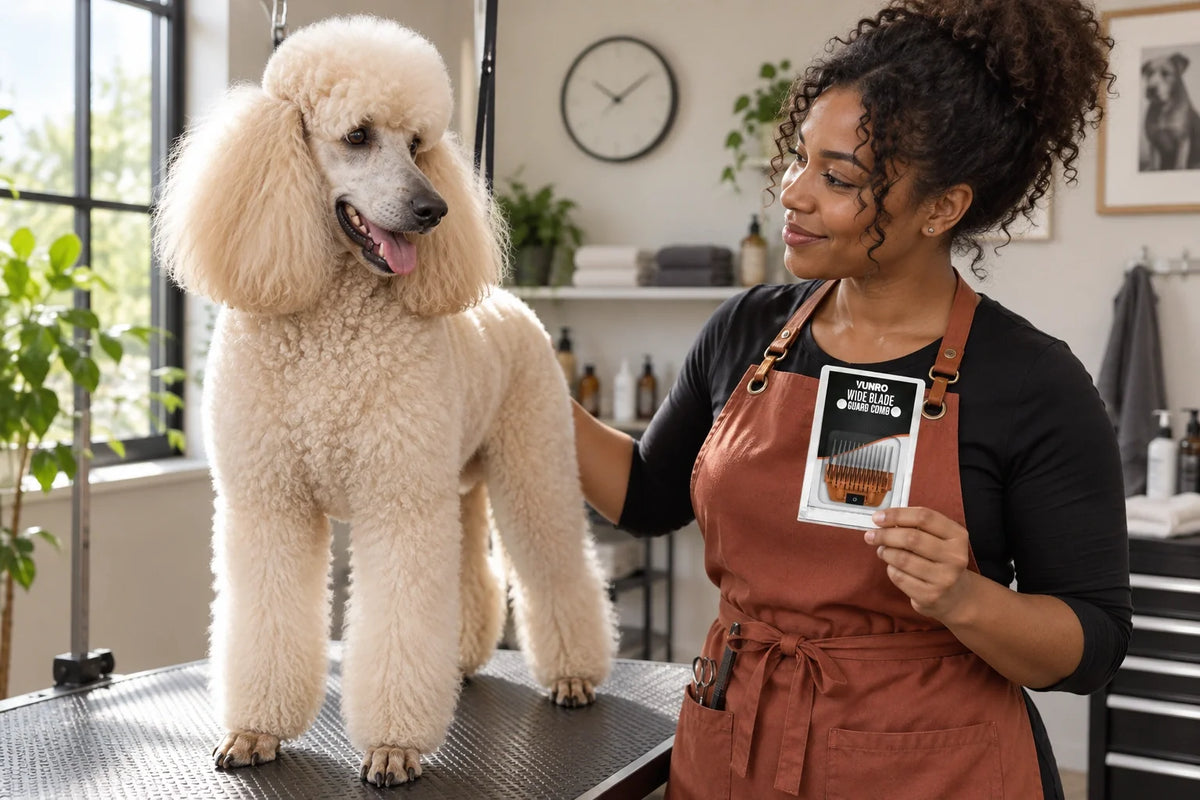
A wider cutting path can reduce the number of passes on a suitable area. That sounds like a time saving. Whether it saves time across an appointment depends on what happens before and after those passes.
For a salon owner, the valuable comparison includes setup, safe handling, the first finish, corrections and equipment turnaround. Timing only the fastest part gives you an incomplete answer.
Define the start and finish of your measurement
Lean process terminology separates the time spent on an operation from the time taken to move through the complete process. The Lean Enterprise Institute also includes loading, unloading and allocated changeover time when describing effective machine cycle time. The useful transfer to grooming is the measurement discipline, not the idea that dogs should behave like production units. Read the process-time definitions.
Choose a boundary you can observe consistently. “Clipper switched on to first body pass finished” is different from “prepared dog ready for clipping to acceptable body finish and equipment put away”. Name the measure before comparing results.
A faster first pass can still lose overall
Here is an illustrative calculation, not a VUNRO test or a promised result:
| Work stage | Setup A | Setup B |
|---|---|---|
| Fit and check equipment | 2 minutes | 3 minutes |
| Initial body work | 14 minutes | 10 minutes |
| Finish corrections | 3 minutes | 7 minutes |
| Equipment turnaround | 2 minutes | 2 minutes |
| Total measured work | 21 minutes | 22 minutes |
Setup B wins the initial pass by four minutes but takes one minute longer within the stated boundary. That is not an argument against wider equipment. It is a reason to find where the extra corrections came from.
Keep quality and welfare in the comparison
Record the intended finish, coat preparation, relevant body region and any handling or rest needs. Do not reduce comfort breaks to improve the number. Mark an appointment as unsuitable for comparison if the dog's needs, coat condition or agreed service changed substantially.
For an initial skills comparison, use suitable practice material and a defined exercise. In normal appointments, collect observations without adding repeat passes merely to generate data. Avoid comparing a familiar setup used by an experienced groomer with a new setup on someone's first attempt.
Choose the right combination before timing it
The VUNRO ColorMax Wide Blade Guard Comb Bundle is for the specified wide A5 #10W, #15W and #30W base blades. It is not the guard set for standard-width A5 or D-Series blades. A wide #5FW is also not one of those specified guard bases.
The VUNRO Universal Guard Comb Set fits the specified standard-width A5 and D-Series #10, #15 and #30 blades. Choose the complete compatible arrangement, then consider whether its working width suits the dog's contours and the finish.
Buy the capacity you can actually use
If one combination produces fewer corrections on the dogs you regularly groom, that is useful local evidence for training and purchasing. Record enough comparable appointments to see whether the result persists, and keep the exceptions visible.
A saved minute is not automatically extra revenue. It becomes commercially useful only if it reduces paid working time, creates bookable capacity or improves a service customers value. Read our guide to trialling a new guard or scissor before turning a promising demonstration into a buying rule.
Keep learning
More from the Blade Blog
From Used Tool to Ready Tool: Close the Gaps in the Care Process
Read the guide →
What a Grooming-Related Skin Infection Case Can Teach a Salon
Read the guide →


